
Hi there,
You’re getting this on a Sunday, not a Friday. I’m back in the UK for a run of work with Education Leaders and to see family, and the newsletter quietly lost its slot in the shuffle. Thanks for bearing with me.
Let me take you back a few years. When I was a student I worked at ASDA. For those of you reading outside the UK, that’s our version of Walmart, a big supermarket. As you would expect, they develop a lot of leaders there. And they wouldn’t dream of putting you in charge of anything until you’d been away, done the training and gone through their management scheme. There was a whole process before you led a single person.
It took me years to notice that schools often do the exact opposite. You’re brilliant in your role as a teacher, so you get promoted, and then you’re expected to manage people by Monday morning, no scheme, no training, just get on with it.
I went into leadership like that. My first proper disciplinary landed within a couple of months and I had no clue what I was doing. So I did what most panicking new leaders do and sat on YouTube the night before, trying to work out what to say. Today you’d probably ask AI. Either way, it wasn’t fair on me and it wasn’t fair on the person sitting opposite me.
Which is why I enjoyed talking to Poppy Nobes on the podcast this week. Poppy is Head of Professional Development at Aldridge Education, and she’s built an in-house programme called Management Mastery to teach the bits of managing people that nobody makes explicit, like running an appraisal or handling it when something goes properly wrong.
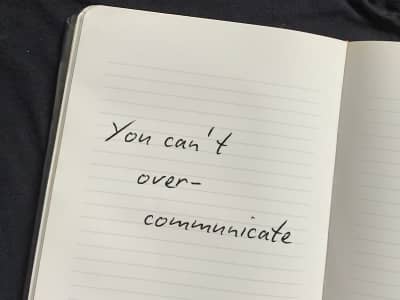
I asked her for the one thing a leader could take away. Her answer was communication. You cannot over communicate, she said, and then she got specific about it.
Most of us treat communication as a personality trait. Poppy treats it as something you design on purpose. How does your team actually prefer to hear from you, email, a message, a call? And where does the important stuff live, so that when someone needs the strategy document they know the exact folder instead of guessing? It isn’t glamorous. It removes a staggering amount of friction, because people who know where to look stop wasting energy working it out.
One thing worth trying this week, and it takes ten minutes. Ask your team two questions. How do you want me to communicate with you, and how do you want to reach me? Then do what they tell you. You’ll clear up more quiet frustration than you’d expect.
This is also the ground I cover on my Leadership Intensive, and the next cohort starts in September. I’m keeping it deliberately small this time, so the conversations are super personal. I’d love to have you in the room.
Shane
PS Reply and tell me the one part of managing people you were never actually taught. I read every single one.
Listen to the latest episode
Click here to listen to this week's episode of my chart-topping podcast, Education Leaders