
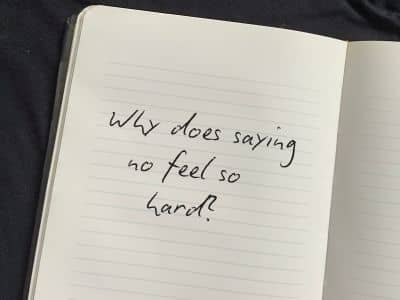
A friend and I were catching up a couple of weeks ago, and we both ended up admitting the same thing. We've each got far too much on. When we dug into why, it traced back to the same cause for both of us. We'd said yes too many times.
The funny thing is that we're both experienced. We've both led organisations, both spent years thinking about this. And still neither of us has managed to break the habit.
So I went looking for why. Not the obvious answer, by the way. The obvious one is psychological safety, and yes, sometimes you say yes because you genuinely don't feel safe to say no. That's real. But I wanted to understand the other thing. The yes you hand to people you trust, in a relationship that works, where nothing is stopping you except something inside you.
Going back through Adam Grant's Give and Take, and a newer book by Sunita Sah called Defy, helped me name four reasons.
The first is that we want to be liked. Yes feels warm. No feels cold, a bit unfriendly, not what you'd expect from someone you get on with. So we reach for the warm option.
The second is that we want to be seen as capable. We worry a no tells our head we're not up to the job, when really it's just us being honest about what's already on the plate. We even have a name for the person we're trying to be. A "can do" person.
The third is the most calculated, and it's so real. We say yes now so we get asked again. Say no this time and maybe the interesting project goes to someone else next time. So you say yes to protect future you.
The fourth is that we treat yes as currency. I'll say yes to you now, and I'm quietly banking it, because at some point I'll need to ask you for something.
When I lined all four up, one thing stood out. Every one of them is a good instinct. Wanting to be liked isn't a flaw. Neither is wanting to be trusted, or wanting to stay close to the good work. Sah makes the point that compliance is trained into us from childhood, to the point where saying yes gives our brains a small hit of dopamine and saying no doesn't. The yes pathway gets stronger every time we use it, while the no pathway stays underdeveloped. I found that reassuring, actually, because while you might not be able to retrain a character defect, you can definitely retrain a habit.
In the episode I go further. I look at what saying yes too much costs you, your team and the person you report to, and I walk through a four-step response I've been using, including one time during COVID when it didn't get me off the hook at all. You can listen here: /podcast/160/
It's also the kind of thing we go deep on in the Education Leaders Intensive. The next cohort starts in September and places are starting to fill, so if untangling habits like this one sounds useful, that's where the proper work happens.
You don't need a programme for the first step though. Look at your own week and see which of the four was behind your last yes. I'm doing the same. Let me know what you find.
Shane
Listen to the latest episode
Click here to listen to this week's episode of my chart-topping podcast, Education Leaders