
There's a school in the south of Spain that had everything. Solar panels on the roof, rainwater harvesting, a building designed to do the right thing. And when Clare Garey's team first walked in, the students had no idea any of it was there. Staff told her the kids couldn't recycle properly and the air conditioning was running at sixteen degrees with the doors propped wide open.
This isn't really a sustainability story. I've watched the same thing play out around almost every initiative a school launches. The kit arrives, the good intentions arrive, and the actual change never does.
We're good at this in schools. Something new gets announced, it picks up a name and a logo and a slot in the briefing, and then we wonder why people roll their eyes the second it comes up again. Claire and I reckon that teachers have the rolliest eyes of any profession. We've all sat through enough big launches that fizzled out by half term to know how the story usually ends.
Clare has spent years getting international schools serious about sustainability, and surprisingly little of her advice is actually about the environment. Most of it is about how a school treats the work itself.
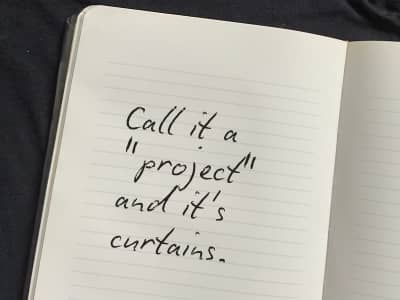
She put it bluntly. The moment a leader calls something a project, it's curtains. A project sits off to one side, with an end date people know they can wait out. The things that really take hold get treated like everything else that matters in a school: a clear reason for doing them, a proper team rather than one exhausted champion, a simple plan, and a place on the agenda when the real decisions get made.
That last one is where I think most of us trip up. We know how to run a curriculum change. We've got a process for it, and we follow the process. But anything softer or newer gets handled like a nice to have, off to the side, and then we're surprised when it stays a nice to have.
That school in Spain is three years down the line now. They've got forty student leaders, and they've got teaching staff, operations and leadership sitting around the same table, which Clare says almost never happens anywhere. Sustainability comes up whenever the big calls get made. These days it runs like everything else they take seriously, and nobody has to chase it.
Every school has a pile of good ideas that quietly went nowhere, and you can probably name a couple of yours. Which of them are you treating like a project, when really it should be core business?
Clare's full conversation is episode 162, and it's worth your time even if sustainability is nowhere near your radar this term: shaneleaning.com/podcast/162
Hit reply and tell me which idea you've let drift. I read all of them.
Shane
PS. Getting something to stick, treating it as real work and practising it until it's just how you operate, is the whole point of the Education Leaders Intensive. Ten weeks, one skill at a time, with the practice and feedback that turn good intentions into changed habits. If it's been sitting on your list, you can book a quick chat about whether it's a fit here: zcal.co/leaningshane/intensive
Listen to the latest episode
Click here to listen to this week's episode of my chart-topping podcast, Education Leaders