
Imagine you've made a call at school today. Maybe it was tough feedback on a lesson observation. Maybe you signed off a timetable change you know a few people will grumble about. Maybe you said no to a parent who really wanted a yes.
You felt fine when you made it. Clear-headed, even.
Then you go home. You're brushing your teeth. Or you're on the sofa. Or you're driving back in traffic. And there it is. That sickly feeling in the pit of your stomach. Did I get that right? Should I send a clarifying email? Maybe soften it in the morning?
This week's podcast is about that feeling. Because I spent about ten years reading it completely wrong, and getting leaders to read it differently has probably been the single most useful unlock I've stumbled on.
Most of us treat that discomfort as data. My gut's talking, so there must be something off about this decision, otherwise why would I feel this bad? Makes sense, right? It's also the trap. The science on this is pretty clear. Making a hard call genuinely changes how you feel afterwards about what you chose. Within seconds, your brain starts quietly revaluing the options, committing to the one you picked. That sickly feeling isn't your intuition warning you. It's your brain doing the work of committing.
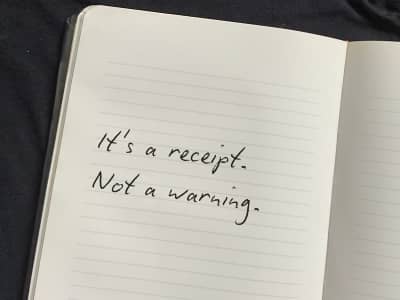
The reframe that changed how I lead: that feeling isn't a warning. It's a receipt.
You made the call. The thing was delivered. The discomfort is just confirmation the transaction went through. You don't stand at the till staring at the paper receipt going oh no, what have I done, maybe I shouldn't have bought this. You paid, you got the thing, the receipt is proof. Your brain works the same way after hard calls.
Knowing this doesn't make the feeling go away. I still get it. I had it on Sunday night after a tough conversation with a client. What changes is what you do with it. I don't treat it as evidence anymore. I don't write panicked emails at 11pm. I don't lie awake running alternate endings. I just go, ah, there you are. Receipt's arrived. That's normal. And I go to sleep.
The full episode goes further: why complaints after a change always sound louder than the thank-yous (there's a Kahneman finding on loss aversion sitting behind this), and why reappraisal protects your working memory in a way suppression doesn't. Have a listen here: shaneleaning.com/podcast/157.
This receipt idea is exactly the kind of thing we work on in the Intensive. We practise it live, on the decisions you're actually sitting with. The next cohort kicks off on September 15th and places are filling fast. Have a look at shaneleaning.com/intensive, or just hit reply and I'll send the details across.
Go easy on yourself this week.
Shane
Listen to the latest episode
Click here to listen to this week's episode of my chart-topping podcast, Education Leaders