
I’m writing this at 35,000 feet on Starlink, and I’ve just run a speed test out of curiosity. It’s faster than the wifi in my flat. Thank you Qatar Airways. I have no idea what to do with that information.
Anyway. Zaretta Hammond.
This week, she explainsed change to me with a trapeze artist. One bar’s gone, the next hasn’t swung in yet, and for a second or two the person is hanging in the air. She calls that a liminal space. You’re not where you were and you’re not where you’re going, and her point is that from up there it’s frightening.
Schools put people in that gap all the time and then check on them halfway through, as though wobbling means something’s broken.
She’s working with a school in Washington DC right now. Ninety days, split into sprints. A full day of professional learning, half of it building shared language, half of it designing something to take back and try for the next month or so. She doesn’t warn them about what’s coming, which is that it’ll go badly. This is the theory of the first pancake. Burnt one end, gooey and beige at the other, nobody’s eating that. Nobody shuts the kitchen either. You thin the batter and pour another one.
One of the teachers in that group is national board certified. Properly good. She came back and said she hadn’t realised how much control she’d been holding onto. Stations, students moving, everything that looks like a well run lesson, and they weren’t getting anywhere near enough room to struggle. She saw it because she made a bad pancake in front of her own class and was sitting in a group where saying so was ordinary.
I do the thing Zaretta’s warning about. When a team wobbles six weeks into something new, my instinct is to add. Another twilight, another clarifying email. Her version is slower and I suspect more useful: get shared language in place so people aren’t talking past each other in jargon, then put four or five teachers round a table with a protocol and let one of them bring the thing that isn’t working while the rest act as critical friends.
She told me about a friend in New York with an electrical fault, and the master electrician who turned up meets other master electricians over coffee, someone brings a problem nobody can crack, they all get their heads round it. Doctors case conference. Somewhere along the line we decided teachers should be past needing that.
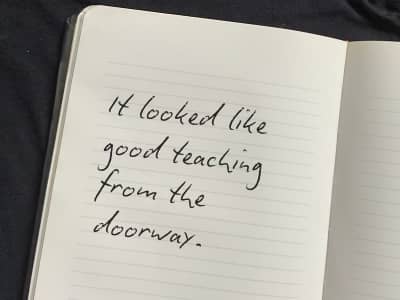
Which is what she means about not being able to PD our way out of a learning crisis. Teachers spend 95% of their time alone with students. Whatever you did on the training day has to survive that door closing, and mostly it doesn’t, because nobody made it safe to get it wrong in front of anyone.
The full conversation is here:educationleaders.co/podcast/169. One of my favourites.
Shane
PS. What’s your school’s version of the dip right now? Hit reply, I read them all. And if you’re the leader who adds things when people wobble, that’s a good chunk of what we work through in the Intensive. September cohort’s open.
Listen to the latest episode
Click here to listen to this week's episode of my chart-topping podcast, Education Leaders