
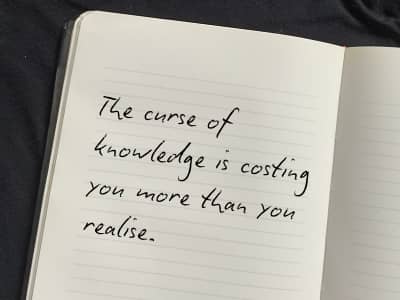
Elizabeth Newton did a study at Stanford where she split people into tappers and listeners. Tappers had to knock out a well-known song on a table. Happy Birthday, something like that. Listeners had to guess what the song was.
The tappers predicted about 50% of listeners would get it right. They could hear the melody in their heads while they were tapping, the words, the tune, all of it.
But only in forty people guessed correctly.
The listeners only had taps. No melody, no context. Just knocking.
Newton called it the curse of knowledge. Once you understand something deeply, you can’t go back to not understanding it. The music plays automatically and you forget nobody else can hear it.
Which is exactly what’s happening when you explain a timetable change or a new assessment process and three people walk away with three different versions of what you said. You weren’t unclear. You just had the melody playing and your team had the taps.
So what do you actually do about it? In this week’s episode of Education Leaders I teach paraphrasing as a practical habit, and I mean genuinely practical. There are three steps. In short, you signal that you’re about to reflect back what you’ve heard. You restate it in your own words, not theirs. Then you check: did I get that right?
The restate step is the one that does the real work. When you translate what someone said through your own understanding and say it back, any gap between what they meant and what you heard becomes visible immediately. Before anyone goes away and does the wrong thing for a fortnight.
Worth a listen if you’ve got twenty minutes.
Listen here → shaneleaning.com/podcast/149
Have a cracking weekend.
Shane
Listen to the latest episode
Click here to listen to this week's episode of my chart-topping podcast, Education Leaders