
Walking into someone else's context with a recommendation ready is one of the easiest mistakes to make in school leadership, and one of the hardest to spot when you're the one doing it.
You see it most obviously with external consultants. They walk in for a morning, watch two lessons, and produce a list of things the school needs to fix. Heads have lived with the consequences for years.
It happens inside schools just as often. A deputy drops into a year group, sees one inconsistent lesson opening, and writes it up as a whole-team issue. A head of school sits in on a head of department meeting and forms a view about culture from forty minutes. A trust leader visits for a day and decides what should change, based on a slice that may not be representative of much.
I've been guilty of this myself, more times than I'd like. You walk in with the best of intentions, and you walk out having added something to a leader's desk that probably wasn't the thing they most needed.
This is what Sam Crome and Chris Passey get into in this week's episode. Both stepped into headship this year after years of building public profiles in the sector through their writing, podcasts, and conference work. The view from inside the chair has changed how they think about people walking into schools to help.
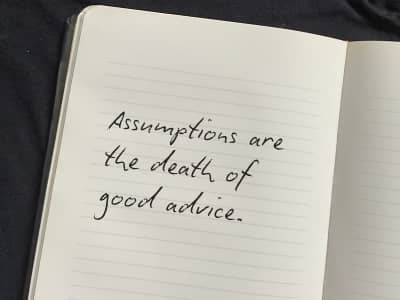
Sam's line was the one that stayed with me.
"Assumptions are the death of good advice."
He talks about how the hardest part of learning to coach was silencing the voice in his head that said he already knew the answer before the other person had finished speaking. He thinks the same instinct is what undoes most external support to schools. People walk in convinced they know what's needed, and they miss the actual context entirely.
Chris's framing sits alongside this. He says heads have a desk full of things they left behind when they came to your session, and that desk is still there when they get back. Whatever you bring adds to that workload. So if you're not adding more than you cost, you've made their week harder.
The fix isn't complicated, but it does require some restraint. Get the context properly before you offer the recommendation, ask more questions than you answer, and accept that what you've seen elsewhere may not apply here.
This applies whether you're an external consultant or a senior leader walking into a colleague's department on a Tuesday morning. You haven't seen enough to recommend yet. Get curious about it first.
You can listen to the full conversation with Sam and Chris here: shaneleaning.com/podcast/159
Shane
P.S. The September cohort of the Intensive is now open for applications. Ten weeks, a small cohort, and the most practical leadership programme I've built. Details and how to apply are at shaneleaning.com/intensive.
Listen to the latest episode
Click here to listen to this week's episode of my chart-topping podcast, Education Leaders