
A while back, I sat in a leadership meeting where one person spoke for about two thirds of it. I remember thinking, well, at least it isn't silent. Afterwards I worked out that six people had said nothing at all, and I was fairly sure two of them knew things I needed.
I let it run. Stopping it would have cost me something right there, in front of everyone. Letting it run cost me nothing I could see.
That's the trade, and it's why most of us do nothing. The awkwardness of interrupting is immediate and public. The benefit shows up later, in a decision that holds. It also doesn't feel like a problem while it's happening, because a monologue with people nodding along still looks a lot like a conversation.
The cost is mega real though. There's research going back to the eighties on what's called a hidden profile, where a group can only reach the right answer if everyone shares the bit only they hold. Groups reliably fail. In the original study only 18% of them got there (Stasser and Titus, 1985), and a meta analysis of 65 studies covering more than 3,000 groups found that groups facing a hidden profile were about eight times less likely to find the answer than groups who already had all the information (Lu, Yuan and McLeod, 2012).
So the person who hasn't spoken is disproportionately likely to be holding the thing that changes your answer. And no, not because quiet people are wiser. But that unique information just sits with fewer people.
Fairness is the usual reason to step in, and it casts you as the referee of the room. I'd rather step in to protect the decision I'm going to have to live with.
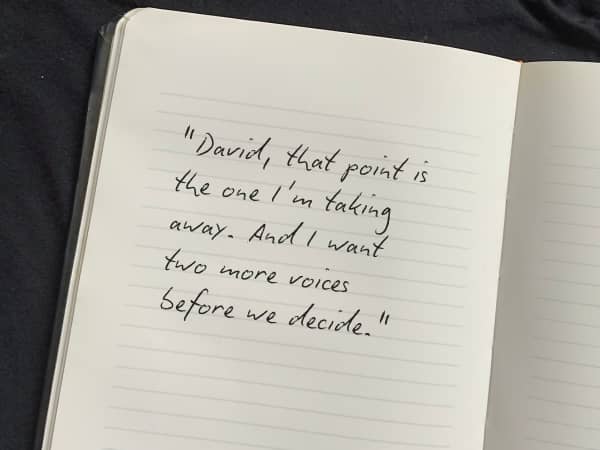
In this week's episode I walk through a redirect that takes about five seconds. Their name, then something specific they actually said, then a bridge starting with and that points at the meeting rather than at them, then an invitation to someone by name. It sounds like this:
"David, that point about the year nine data is the one I'm taking away. And I want two more voices before we decide. Sunita, what's your read on this?"
On timing, the first time you notice it's running long, keep listening. The second time you notice, go in. Leave it later than that and your interruption starts carrying the irritation of the whole room with it.
Meetings is one of the ten levers in the Intensive, and there are a few places left on the September cohort. There's a payment plan if that helps. educationleaders.co/intensive
Shane
PS. If you've got a version of this that works better than mine, hit reply and tell me. As you know, I'm a super geek and love to collect these.
Listen to the latest episode
Click here to listen to this week's episode of my chart-topping podcast, Education Leaders